
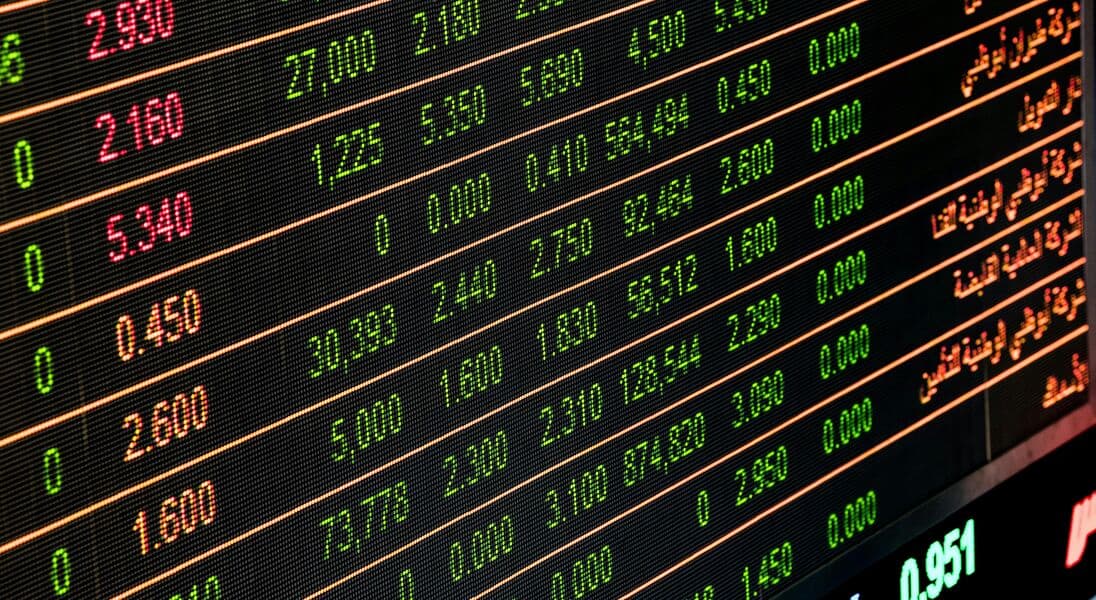
The TUNINDEX shed 1.14% to close at 15,237.45 points on Monday, March 16, 2026, dragged down by a banking sector rout that offset gains in automotive and airline stocks, as Middle East geopolitical tensions kept Brent crude near crisis levels around $100.31 per barrel, pressuring energy-import-dependent Tunisia's fiscal outlook.
Market Context: Broad-Based Caution
The benchmark TUNINDEX20, focused on large-cap stocks, deepened the bearish trend with a loss of 1.31% to 6,778.39 points, according to data transmitted by the BVMT (Tunis Stock Exchange). Market breadth reflected marked investor defensiveness amid commodity volatility: out of 75 listed stocks, 30 finished in the red versus 16 rising and 29 unchanged, indicating a clear buyer-seller imbalance favoring the bears. Trading volumes, while not officially disclosed by the BVMT at this hour, appeared concentrated on economically cyclical stocks, according to market observations reported by Financial Afrik. The session fit into a difficult regional context, where African exchanges struggled to digest the oil shock triggered by Middle East tensions. Attijari Bank, one of the exchange's largest capitalizations, led the decline with a drop of 4.7% to 70.51 TND, erasing part of the gains accumulated since the beginning of the year. This correction comes as Brent crude, despite falling 2.7% during the session to $100.31, has surged 9.1% over one week, heightening concerns over Tunisia's trade deficit. Tunisia, a net energy importer covering more than 90% of its needs, sees every $10 increase in the barrel swell its energy bill by approximately 1.5 billion TND annually, according to estimates from the Center for Studies and Research on Renewable Energies. This budgetary pressure directly threatens the quality of local banks' portfolios, which hold significant amounts of government paper, explain analysts contacted by Afrivestia. In this context, BTE (ADP) lost to and Tunis Re shed to , while insurer Unimed retreated to .