
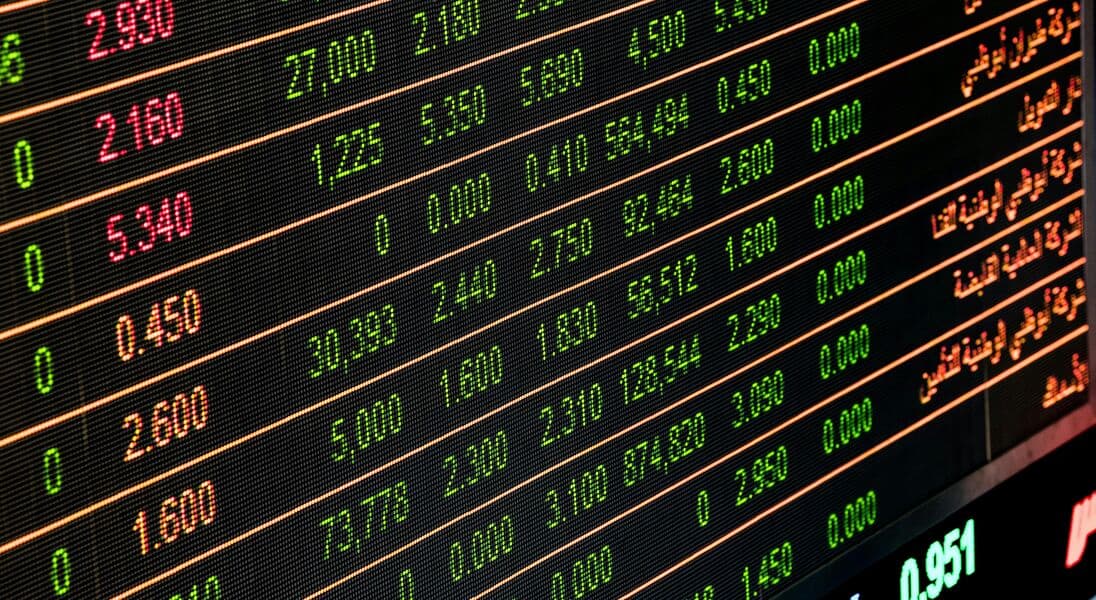
The TUNINDEX closed down 0.49% at 14,877.24 points on Monday, March 9, 2026, while the TUNINDEX20 benchmark retreated 0.52% to 6,600.56 points, demonstrating remarkable resilience against the global oil shock that propelled Brent crude to $98.62 per barrel (+6.4% daily, +21.1% weekly). This relative underperformance compared to steeper declines observed on neighboring North African exchanges stems from an unexpected macroeconomic divergence: the Tunisian dinar strengthened against the dollar to 2.9075 TND (-0.31%) and against the euro to 3.3689 TND (-0.52%), creating an unusual currency dynamic for a net energy-importing economy.
A Market in Precarious Balance
The session was marked by selective caution, with revealing market breadth: out of 75 listed securities, 21 stocks advanced against 24 decliners and 30 unchanged, according to official BVMT data. This near-balanced distribution reflects investor wait-and-see attitudes amid commodity volatility and Middle Eastern geopolitical uncertainty fueling the oil surge.
The apparent stability of the Tunisian dinar, surprising given the energy import bill weighing on the trade deficit (-0.31% for USD/TND despite a 21% Brent spike), suggests potential intervention by the Central Bank of Tunisia (BCT) in foreign exchange markets or support for foreign reserves, according to analysts contacted by Financial Afrik. For an economy where energy imports represent structural pressure on public finances, this currency resilience offers temporary relief to local investors, though the sustainability of this exchange rate level remains questionable in the medium term.
Banking and Construction Materials Sectors Hold Firm
Among advancing stocks, Société Tunisienne de Banque (STB) shone with a 3.6% gain to 4.28 TND, lifting its market capitalization to unspecified but significant levels for the country's leading public institution. This rebound comes as the Tunisian banking sector, dominated by state-owned banks (STB, BNA, BH) coexisting with private players like BIAT and Amen Bank, faces liquidity and non-performing loan challenges. STB's performance may reflect expectations of state support or a revaluation of banking assets in a potentially rising rate environment.