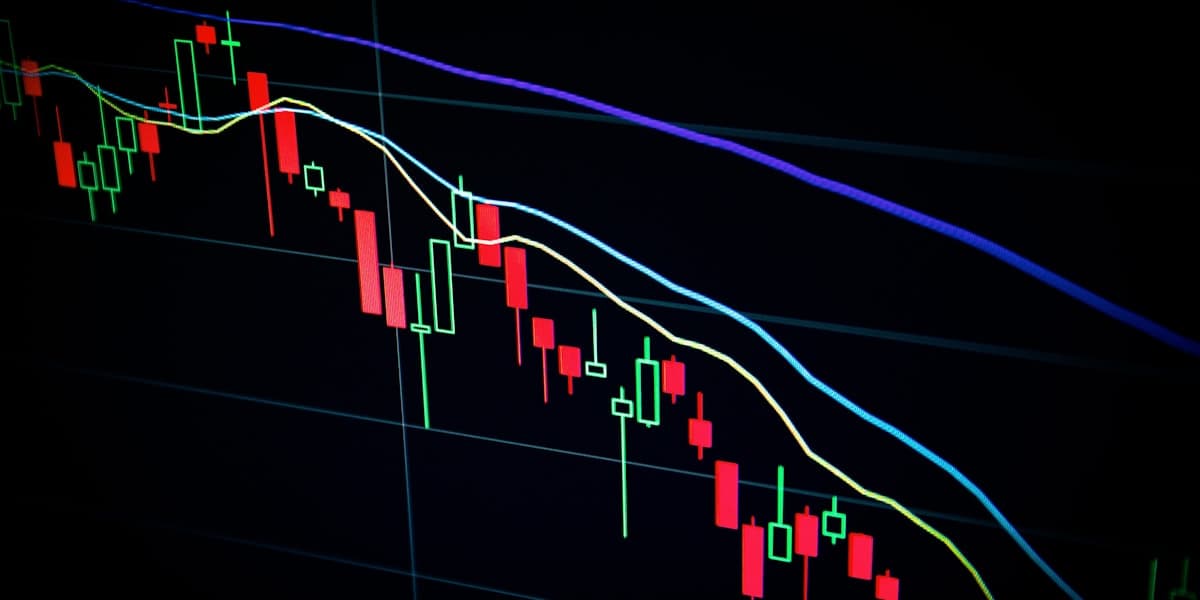
Cairo Stock Exchange — EGX 30 Slips 0.28% as CIB Draws EGP 747m, HELI and MFPC Climb
The EGX 30 fell 0.28% on Monday, May 11, 2026, in a mixed session with 14 gainers against 27 losers. CIB led turnover at EGP 747 million, while Heliopolis, MFPC and several fertilizer and energy-linked names benefited from firmer commodity prices.
|5 min read
The key takeaway from the Egyptian stock exchange today was a sharp split beneath the headline index: the EGX 30 slipped 0.28% to 54,475.5 points on Monday, May 11, 2026, yet several industrial and property names advanced strongly while Commercial International Bank alone accounted for EGP 747.1 million in turnover. That divergence matters because it points to sector rotation rather than broad-based liquidation.
The market’s internal picture was weaker than the index move suggests. Breadth ended at 14 gainers, 27 losers and 3 unchanged out of 44 tracked stocks, showing that decliners clearly outnumbered advancers even as selected names posted gains of more than 3%. Heliopolis for Housing & Development rose 3.1% to EGP 7.08 on EGP 353.9 million in traded value, while Misr Fertilizer Production Company also added 3.1% to EGP 45.15.
The benchmark’s decline came in a session dominated by heavy trading in bellwether financials. Commercial International Bank, still the clearest proxy for institutional positioning on the Cairo market, fell 0.4% but led turnover at EGP 747,079,047, ahead of Qalaa Holdings at EGP 528.8 million and Palm Hills at EGP 427.9 million. When Egypt’s largest private-sector bank trades that much value with only a modest price move, it usually signals portfolio reshuffling rather than panic selling.
Macro conditions help explain the caution. The USD/EGP stood at 52.67, down just 0.04% on the day, a reminder that currency stability remains the dominant lens for Egyptian equities after repeated devaluations between 2022 and 2024. For local investors, a steady pound reduces immediate balance-sheet stress; for foreign investors, however, equity returns still need to be read in hard-currency terms. At the same time, global energy markets turned more hostile. Brent crude climbed 3.1% to $104.39 a barrel, while natural gas rose 5.5% to $2.91, against a backdrop of Middle East war risk and headlines about the UAE leaving OPEC. For Egypt, that combination matters because higher imported energy costs can squeeze margins across manufacturing, transport and consumer sectors.
Main story: commodities and selective rotation beat the index
Why did these names outperform while the EGX 30 index fell? First, higher oil and gas prices tend to refocus attention on producers and processors with direct exposure to energy-linked pricing, feedstock dynamics or export optionality. Second, the broader commodity complex was also moving: wheat rose 4.0% to 631.75, cotton gained 2.1% to 86.51, and cocoa surged 13.9% to 4,683.0. Those moves reinforce the idea that agricultural and industrial input chains remain central to Egypt stock market analysis, especially for fertilizer and chemical counters whose earnings sensitivity is tied to global pricing cycles.
Property stocks also showed a more nuanced pattern than the benchmark implied. HELI’s 3.1% rise on EGP 353.9 million in turnover stood out because other major developers moved the other way, with Talaat Moustafa down 1.8% to EGP 98.25 and Emaar Misr off 1.5% to EGP 11.03. That suggests the market is no longer treating Egyptian real estate as a single macro trade. Instead, it is differentiating more aggressively between land-bank stories, liquidity profiles and valuation catch-up candidates.
Supporting stories: announcements, defensives and pressure pockets
The official news flow was busy, with 20 announcements released between May 10 and May 11, 2026. Taqa Arabia published board decisions, EFG Holding released AGM minutes, SAIB disclosed board outcomes, and Egypt Aluminum announced the signing of a strategic partnership agreement. The exchange also carried several Sarwa securitization coupon notices, a reminder that fixed-income activity remains part of the broader liquidity backdrop in Egypt.
Among stocks specifically tied to the day’s announcement flow, performance was mixed:
•ABUK: +2.6% to EGP 86.0
•AMOC: +1.9% to EGP 8.56
•EAST: +0.8% to EGP 40.31
•BINV: +0.7% to EGP 41.32
•CLHO: +0.7% to EGP 14.94
•COMI: -0.4% despite EGP 747.1 million in turnover
•EFIH: -1.6% to EGP 22.32
•ACGC: -1.6% to EGP 8.71
•DSCW: -1.5% to EGP 1.94
The pressure on financial and growth-linked names weighed on the benchmark more than the headline move alone indicates. EFG Holding fell 1.5% to EGP 29.5 on EGP 273.2 million in turnover, while e-finance lost 1.6%. Eastern Company, often treated as a defensive market favorite because of its margins and dividend profile, rose only 0.8% to EGP 40.31. That underlines the day’s preference for commodity-sensitive names over classic defensives or digital-finance plays.
For recent context, the session followed a stretch in which property counters had already dominated attention, as noted in Bourse du Caire — Palm Hills bondit de 8,3% et domine 785,2 M EGP d’échanges. The difference on May 11 was that leadership broadened away from pure real estate momentum and toward chemicals, fertilizers and selective industrials.
Outlook
The next test for the Cairo stock market is whether the benchmark can hold near 54,000 points despite negative breadth and uneven sector leadership. Three variables matter most in the near term: the path of USD/EGP around 52.67, whether Brent remains above $104, and how investors digest the company disclosures released on May 10-11. On the macro side, any signal on central bank rates, foreign-currency inflows from tourism, remittances and the Suez Canal, and the impact of energy costs on industrial margins will shape the next read on EGX today far more than any single one-day move in the index.