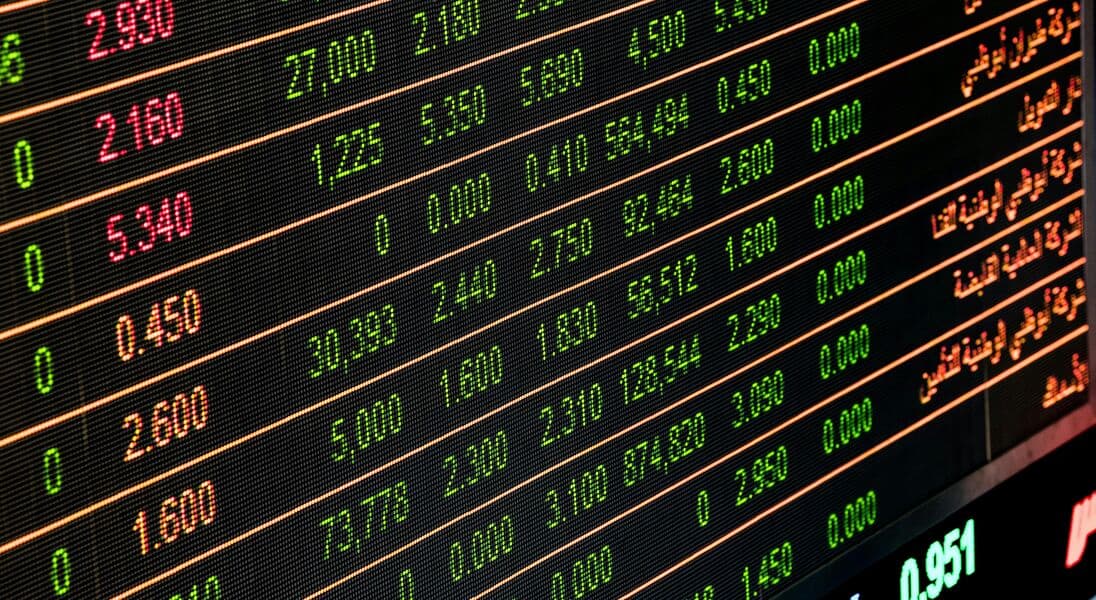
BRVM (West Africa) — BOA Capital Raises Weigh on Banks as BRVM-30 Adds 0.35%
BRVM ended little changed on September 30, 2026, with the Composite at 548.38 points (+0.06%) as financials fell 1.28%. Multiple Bank of Africa capital increase announcements shaped trading, while the BRVM-30 rose 0.35%.
|6 min read
West Africa’s stock market closed on Wednesday, September 30, 2026 with a deceptively calm headline number: the BRVM Composite edged up 0.06% to 548.38 points, but that modest gain masked a clear selloff in financials, down 1.28%, as several Bank of Africa subsidiaries formally announced capital increases. That split also helps explain why the BRVM-30 rose 0.35% while the BRVM Principal fell 1.50%—a session driven by selective liquidity rather than broad-based conviction.
Market context: flat index, sharp sector rotation on the BRVM stock exchange today
The BRVM Composite Total Return ended at 220.92 points, also up 0.06%, leaving its year-to-date gain at 1.7%. Market breadth was not especially supportive: 12 stocks advanced, 17 declined and 18 were unchanged, meaning most of the West Africa stock market did not participate in the benchmark’s slight rise.
Sector performance told the real story. Telecommunications jumped 1.98%, far ahead of utilities at +0.02% and energy at +0.08%. On the downside, consumer discretionary fell 1.83%, financial services dropped 1.28%, industrials lost 0.85%, and consumer staples slipped 0.30%. That pattern points to a market favoring defensive and liquid names while trimming exposure to funding-sensitive and consumption-linked stocks.
Global macro mattered at the margin. Brent crude fell 4.0% on the day to $98.45 a barrel, taking its weekly decline to 5.6%, after volatile trading linked to geopolitical tensions and stalled U.S.-Iran talks. For the WAEMU region, which imports refined petroleum products, softer oil prices can eventually ease pressure on import bills and distribution costs, though the transmission is neither immediate nor uniform. Meanwhile, cocoa slipped 1.3% to $5,338 a tonne, a relevant signal for Ivorian equities given Ivory Coast’s role as the world’s top producer. Lower cocoa prices can affect export receipts, domestic liquidity and sentiment around agro-linked names, even if stock-specific drivers remain decisive.
Main story: BOA capital increases reshape the banking trade
The defining feature of the session was not the index level but the cluster of official notices published on September 29 and 30, 2026 regarding capital increases at Bank of Africa Benin, Bank of Africa Senegal, Bank of Africa Burkina Faso and Bank of Africa Mali. On the BRVM, where recapitalizations often move prices more than macro headlines, such announcements immediately change how investors read the sector. They can be seen as supportive for balance-sheet growth and regulatory capital, but they also raise short-term dilution questions.
That tension showed up clearly in prices. Bank of Africa Côte d’Ivoire fell 0.9% to 11,500 XOF, Bank of Africa Benin slipped 0.2% to 9,750 XOF, and Bank of Africa Niger dropped 0.8% to 5,300 XOF. Only Bank of Africa Burkina Faso managed a 0.1% gain to 8,200 XOF, a limited move against the sector’s 1.28% decline. Elsewhere in banking, Société Générale Côte d’Ivoire added 0.2% to 38,990 XOF and Société Ivoirienne de Banque rose 0.1% to 9,160 XOF, showing that weakness was not indiscriminate across financials but concentrated around names directly tied to the BOA announcement cycle.
Turnover reinforced that reading. BOAC traded 136.2 million XOF, BOAS traded 76.3 million XOF, and ETIT, the Togo-based pan-African parent, traded 90.2 million XOF while rising 1.5% to 67 XOF. On a market where liquidity is structurally thinner than in Johannesburg or Cairo, those figures matter. They suggest active repositioning around capital structure, future payout capacity and funding needs in a region where BCEAO policy still shapes bank valuations, especially with the XOF fixed to the euro at 655.957 per euro.
This extends a theme already visible in BRVM (Afrique de l'Ouest) — Sonatel draine 2,71 mds XOF, les banques BOA se recapitalisent, but the September 30 session showed the market is no longer treating those filings as background noise. They are now being priced into bank valuations at a time when credit growth across WAEMU must coexist with tighter capital requirements and still-sensitive risk costs in several member economies.
Supporting stories: dividend support, agro resilience, mixed energy response
Away from banks, the day’s top gainer was Servair Abidjan Côte d’Ivoire, up 2.0% to 3,640 XOF, one day after the announcement of a net dividend of 124 XOF with ex-date on September 29, 2026. On the BRVM, post-dividend price adjustments are not always mechanical, especially in lower-float names. In this case, the market appeared to focus on yield and operating visibility, according to official exchange notices. Servair Abidjan had already featured in Servair détache 124 FCFA, les télécoms et la finance masquent un marché à deux vitesses, but Wednesday’s gain suggests the stock still has tactical support.
In Ivorian agriculture, SAPH Côte d’Ivoire rose 1.1% to 7,995 XOF, SOGB Côte d’Ivoire gained 0.6% to 8,100 XOF, and Palm Côte d’Ivoire added 0.5% to 8,290 XOF. Those moves came even as cocoa fell 1.3%, underlining that BRVM agricultural stocks do not all trade off the same commodity. Rubber, palm oil and company-specific export dynamics can matter more than cocoa alone. By contrast, Sucrivoire fell 0.5% to 2,835 XOF, Solibra Côte d’Ivoire lost 0.8% to 37,500 XOF, and CFAO Motors Côte d’Ivoire dropped 0.6% to 1,545 XOF, pointing to softer appetite in domestic consumption names.
Energy stocks were mixed despite the drop in crude. TotalEnergies Marketing Sénégal rose 0.7% to 3,640 XOF, while Vivo Energy Côte d’Ivoire fell 0.4% to 2,360 XOF. That divergence is not unusual on the BRVM. Listed fuel distributors do not pass Brent moves directly into margins on a same-day basis; pricing frameworks, inventory effects and regulated mechanisms all matter. In practice, the market often trades these names more on liquidity and corporate news than on the oil price alone.
One more notable feature was the concentration of turnover in telecoms. Sonatel Sénégal was unchanged at 45,000 XOF but accounted for 995.2 million XOF in traded value, by far the largest on the board. Even without a price move, that scale matters because Sonatel remains one of the exchange’s main liquidity anchors and often stabilizes index performance when breadth is weak.
Outlook: what to watch next in BRVM market analysis
The next step for the market is to parse the exact terms of the BOA capital increases—timing, issue prices, subscription rights and deal sizes—because those details will determine the real impact on valuations. Traders will also watch commodity moves, especially Brent at $98.45 and cocoa at $5,338, along with any fresh official notices on dividends and corporate actions. In a market still dominated by Ivory Coast stocks, the ability of financials to absorb this recapitalization wave without deeper multiple compression will be one of the key tests for early October 2026.