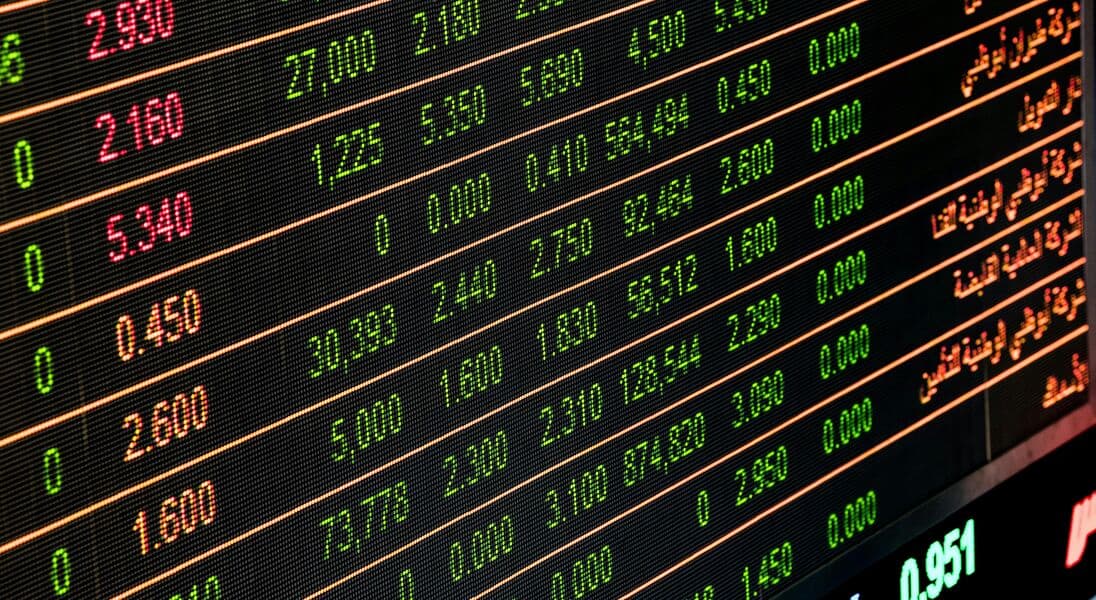
Nairobi Securities Exchange — NSE Plc Slips 3.1% Despite H1 Results as Safaricom Lifts the Index
The NSE 25 rose 1.0% on September 14, 2026, helped by Safaricom’s 2.4% gain even as Nairobi Securities Exchange Plc fell 3.1% after releasing H1 results. The divergence points to a selective market shaped by earnings, higher oil prices and a weaker shilling.
|6 min read
A sharp divergence defined trading in Nairobi on Monday, September 14, 2026: the NSE 25 rose 1.0% to 2,770.18, lifted by Safaricom Plc, which gained 2.4% to KES 36.35, while Nairobi Securities Exchange Plc fell 3.1% to KES 28.1 after releasing its unaudited half-year results. That split captured the mood of the session: earnings were plentiful, but investors were selective about which business models deserved a higher rating.
The macro backdrop mattered. Brent crude climbed 3.8% on the day to $108.61 a barrel and was up 7.3% on the week, while USD/KES rose 0.76% to 129.4. For Kenya, a net fuel importer, that combination raises the local-currency cost of energy, transport and imported inputs. It also helps explain why the market rewarded defensive cash-generative names while remaining cautious on companies more exposed to margin pressure.
Key figures
- NSE 25: +1.0% at 2,770.18
- Nairobi Securities Exchange Plc: -3.1% at KES 28.1
- Safaricom: +2.4% at KES 36.35 on KES 644.3 million traded
- Brent crude: $108.61, up 3.8% on the day
- USD/KES: 129.4, up 0.76%
Market context: index up, but breadth tells a narrower story
The headline gain in the benchmark masked a weaker underlying tape. Market breadth came in at 22 gainers, 30 losers and 3 unchanged out of 55 counters, meaning decliners outnumbered advancers even as the index moved higher. That is a classic sign of concentration, and on the NSE Kenya today, concentration still starts with Safaricom.
Turnover data reinforced that point. Safaricom Plc accounted for KES 644.35 million in traded value, far ahead of KCB Group at KES 168.68 million, I&M Holdings Plc at KES 25.10 million, Equity Group Holdings Limited at KES 24.86 million, and East African Breweries at KES 17.22 million. In practical terms, the Nairobi stock exchange today was driven by a handful of liquid large caps, while much of the broader list remained under pressure.
Among the day’s top gainers, Shri Krishana Overseas jumped 15.3% to KES 17.3, Limuru Tea rose 7.1% to KES 530.0, Olympia Capital added 6.3% to KES 8.06, and East African Portland Cement gained 6.0% to KES 123.0. On the losing side, East African Breweries fell 1.7% to KES 285.0, Car and General lost 1.8% to KES 280.0, KCB dropped 1.9% to KES 92.0, Co-operative Bank shed 2.2% to KES 36.2, and Kenya Re slid 4.8% to KES 4.15.
NSE Plc H1 earnings: resilient institution, but investors want proof of operating leverage
The central story was the release of Nairobi Securities Exchange Plc’s unaudited financial statements for the six months ended June 30, 2026, alongside a cluster of strategic disclosures: a retail access initiative, AGM notices, proposed amended articles, a 2025 ESOP announcement and the appointment of a non-executive director. In total, the exchange published or hosted 20 official announcements during the session, underlining how active the corporate news flow was.
Yet the stock fell 3.1%. That suggests the market looked beyond the headline fact of publication and focused instead on the quality and scalability of the exchange’s earnings base. A listed bourse typically relies on 3 main revenue engines: trading activity, listing-related fees and ancillary services. The problem, visible again in Monday’s tape, is that liquidity remains concentrated in a small number of counters. If turnover is heavily skewed toward 5 names, the exchange’s growth profile can look less diversified than the benchmark’s move implies.
The decline in NSE Plc also came on the same day the market highlighted broader retail access and the future ability for local investors to trade global exposure through the listing of the Satrix MSCI World Feeder ETF. Strategically, that is meaningful. It expands product depth, supports financial inclusion and could improve engagement from domestic savers over time. But equity investors often discount execution risk first. New products can require technology, education and distribution spending before they translate into recurring fee income. Monday’s price action showed that the market is increasingly separating the performance of the exchange as an operator from the performance of the market it hosts.
Safaricom offsets bank weakness and shapes NSE share prices
Safaricom’s 2.4% rise to KES 36.35 was the day’s decisive counterweight. In Kenya, where Safaricom can account for a very large share of market capitalization and index direction, a move of that size can overwhelm weakness elsewhere. The company’s audited results for the year ended March 31, 2026 put the focus back on the group’s core earnings pillars: telecom services, data monetisation, M-Pesa and the longer-term contribution from Ethiopia.
That matters because the macro setting is not benign. A USD/KES rate of 129.4 raises the cost of imported network equipment, while higher oil prices can feed inflation and pressure household spending. Even so, the market chose to reward Safaricom’s relative earnings visibility and recurring cash-flow profile. For readers tracking the safaricom share price today, the message was straightforward: demand remains strong for dominant franchises with multiple revenue streams and regional optionality.
Banks, by contrast, sent a more mixed signal. KCB fell 1.9% to KES 92.0, Co-operative Bank lost 2.2% to KES 36.2, while Equity Group edged up just 0.2% on KES 24.86 million traded and I&M Holdings rose 1.9% to KES 79.75. That divergence reflects a more nuanced sector read. A weaker shilling can support translation from regional subsidiaries in Uganda, Tanzania, Rwanda or the DRC, but it can also strain borrowers exposed to imported costs and squeeze consumer purchasing power. For anyone following the Equity Bank share price or KCB share price, Monday did not deliver a single clean sector verdict.
Supporting earnings stories: fuel, industry, media and logistics in focus
Beyond NSE Plc and Safaricom, the session was packed with earnings releases. TotalEnergies Marketing Kenya Plc published audited 2025 results in a market where Brent at $108.61 can lift nominal revenue but also increase working-capital needs and sharpen regulatory sensitivity around pump prices. For fuel marketers, higher crude does not automatically mean better margins; if retail price adjustments lag procurement costs, profitability can tighten rather than expand.
Car & General Kenya also released consolidated audited financial statements for the period ended December 31, 2025, yet the stock fell 1.8% to KES 280.0. The macro link is direct: a stronger dollar raises the local-currency cost of imported vehicles, equipment and spare parts. Unless that can be fully passed on, margins come under pressure. Nation Media Group, Express Kenya, Home Afrika and Shri Krishana Overseas were also among the names reporting, making this one of the busiest earnings-led sessions on the exchange in recent weeks.
East African Breweries’ 1.7% decline to KES 285.0 also fits the broader cost narrative. Consumer names are exposed to fuel, packaging, logistics and household demand at the same time. With oil up 7.3% on the week and the shilling weaker by 0.76% against the dollar on the day, the market appears to be pricing a tougher operating environment for discretionary spending businesses, even though EABL still drew KES 17.22 million in turnover.
Outlook: what to watch after a 20-announcement session