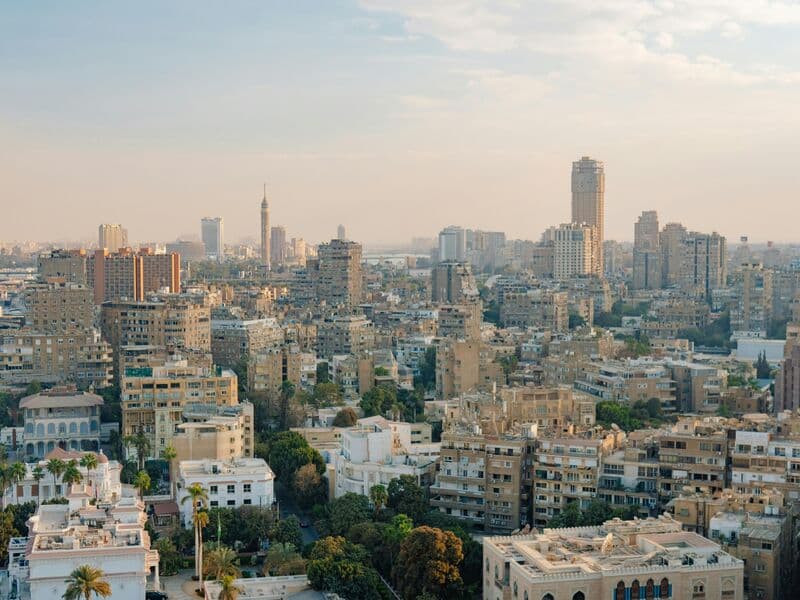
Cairo Stock Exchange — Arab Developers Posts Q3 Results as EGX 30 Slips 0.39%
Arab Developers Holding released its quarterly results on September 10, 2026, against a more selective Egyptian market backdrop. The EGX 30 fell 0.39% as Brent at $107.39 and USD/EGP at 51.31 sharpened investor focus on costs, FX and balance-sheet resilience.
|6 min read
A mid-cap developer drew the market’s attention on the Egyptian stock exchange today: Arab Developers Holding released its standalone third-quarter results on September 10, 2026, even as the EGX 30 index slipped 0.39% to 56,280.2. The contrast says a lot about a market that is becoming more selective, with Brent crude at $107.39 a barrel up 6.1% on the day and 11.5% on the week, while USD/EGP rose 0.63% to 51.31, putting funding costs, imported inputs and hard-currency earnings quality back at the center of valuation.
On this Thursday, September 10, 2026 session, market breadth was mildly negative, with 18 gainers, 21 losers and 5 unchanged stocks out of 44 tracked names. That matters because the flagship index decline was not a broad-based selloff. It was a selective rotation across defensives, property names and companies most exposed to oil-linked costs or foreign-exchange pressure.
Market context: FX and oil are again driving the Cairo tape
The drop in the EGX today reading came in a tougher macro backdrop for Egyptian equities. In Egypt, stock performance cannot be read in local currency alone. With USD/EGP at 51.31, up 0.63% on the day, any return in EGP needs to be reframed in dollar terms. That is a defining feature of the Cairo market after the multiple devaluations of 2022-2024, which changed how investors assess earnings, dividends and valuation multiples.
Brent’s move back above $100 adds a second layer of pressure. For an economy where many industrial chains still absorb imported energy or energy-linked logistics costs, oil at $107.39 can squeeze margins through transport, materials and indirect power costs. That helps explain weakness in cyclical and industrial counters, including Abu Qir Fertilizers, down 1.1% at EGP 93.5, alongside other domestic-demand-sensitive names.
Yet turnover data showed investors were not abandoning the market. The heaviest trading was concentrated in COMI at EGP 732.17 million, ETEL at EGP 469.40 million, AMOC at EGP 267.86 million and TMGH at EGP 205.51 million. That points less to risk-off capitulation than to active repositioning toward balance sheets seen as better able to absorb higher funding costs and a weaker pound.
Arab Developers Holding puts earnings season back in focus
The key corporate event of the day came from Arab Developers Holding, which released standalone 3-month results, according to official EGX announcements dated September 10, 2026. The company also featured in a disclosure form release and board decisions on the same day, making it one of the session’s densest information stories. Because the detailed income-statement figures are not included in the verified data provided here, it would be irresponsible to manufacture a precise read on revenue, margins or net profit. Even so, the timing of the release matters in a listed property sector that remains one of Egypt’s clearest transmission channels for rates, FX and household purchasing power.
Why does this name matter? Because Egyptian developers operate in a market where construction inputs, often linked directly or indirectly to the dollar and to energy prices, can move faster than contracted selling prices. With USD/EGP at 51.31 and Brent up 11.5% over the week, investors are no longer rewarding nominal sales growth alone. They are asking whether developers can preserve margins, finance land banks and convert presales into real cash generation. That is especially relevant for second-tier players, whose access to funding and balance-sheet flexibility are typically narrower than those of the largest listed groups.
The session itself delivered a nuanced message on listed real estate. Emaar Misr rose 2.1% to EGP 14.9, making it one of the day’s top gainers, while Palm Hills Developments fell 0.9% to EGP 14.45 and SODIC dropped 1.6% to EGP 32.69. That dispersion shows the market is no longer treating the sector as a single macro trade. It is differentiating by pipeline quality, execution speed, debt structure and the ability to pass cost inflation through to buyers.
What the session says about Egypt’s earnings trade
The 0.7% decline in Commercial International Bank to EGP 138.17, despite EGP 732.17 million in turnover, was another important signal for the Cairo stock market. CIB remains Egypt’s bellwether bank and, by extension, a proxy for macro confidence. When the dominant lender weakens on an earnings-heavy session, it often reflects broader caution around credit demand, funding conditions and the interest-rate path of the Central Bank of Egypt.
That caution also showed up in declines for Eastern Company, down 1.7% to EGP 34.8, and El Sewedy Electric, down 2.6% to EGP 127.5, even if those names are not the lead story today. On the other side of the tape, pockets of resilience were visible. Delta Sugar gained 2.3% to EGP 63.0, Arabia Cotton Ginning added 1.4% to EGP 15.42, and Credit Agricole Egypt rose 0.6% to EGP 25.48. In a market dealing with volatile agricultural and energy inputs, those moves suggest investors are rewarding companies perceived as better positioned on pricing power or revenue visibility.
It is also worth noting the broader regulatory and corporate flow beyond Arab Developers. Fawry issued a release regarding a disclosure form, Telecom Egypt published an update on executive management, and Egyptian Chemical Industries (Kima) announced board decisions. Not all of those disclosures triggered immediate price swings, but they add to the fundamental reading of a market where company-level developments matter as much as macro headlines.
Supporting stories: chemicals, fintech and balance-sheet discipline
Among names with fresh disclosures, EGCH (Kima) closed up 0.4% at EGP 13.95 after board decisions. The gain was modest, but notable on a negative index day. In a higher-energy-cost environment, chemical producers are being watched closely for their ability to defend spreads, especially when imported inputs and logistics become more expensive.
The Fawry disclosure, meanwhile, is a reminder that the digital-payments theme remains structurally important in Egypt, even when the session is dominated by FX and oil. Investors continue to look to fintech-linked names for growth that is less directly tied to property or industrial cycles, although valuation still depends heavily on domestic funding costs.