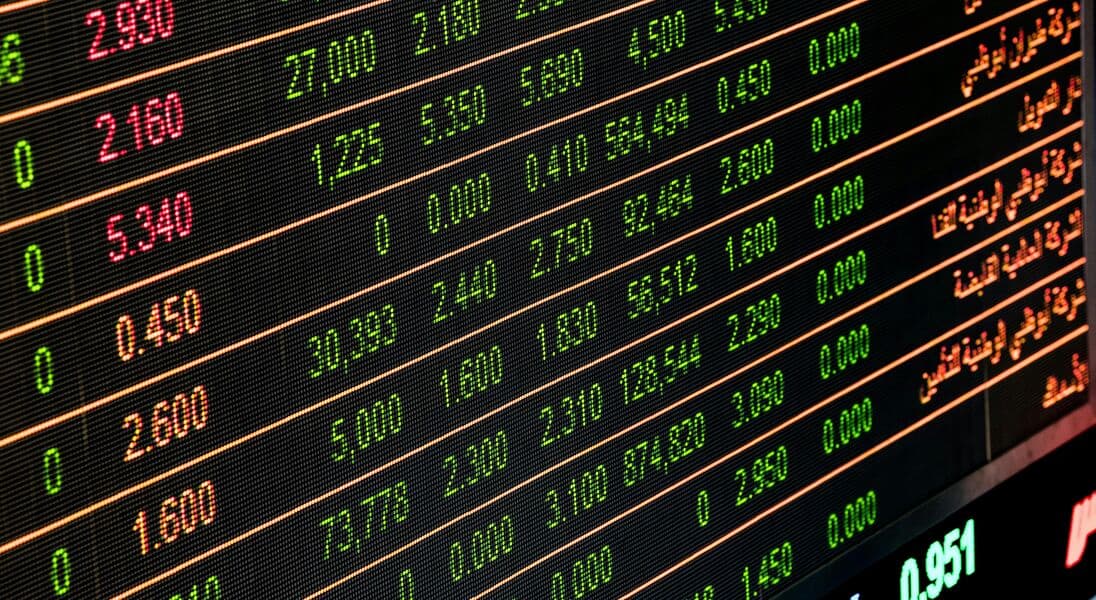
BRVM (West Africa) — Industrials Jump 1.86% as Dividend Flow and Bank Turnover Drive Trade
The BRVM ended the week to September 4, 2026 with modest gains, as the Composite Total Return reached 220.81 points (+0.49%). Industrials led the move (+1.86%), while dividend announcements and heavy bank turnover shaped trading.
|7 min read
The week ending Friday, September 4, 2026 closed with a measured but meaningful advance on the BRVM, where the BRVM Composite Total Return rose 0.49% to 220.81 points and the BRVM Composite gained 0.45% to 548.6 points. The key story was not a broad-based surge, but a clear rotation into industrials, up 1.86%, helped by dividend season and heavy turnover in several West African banking names.
Key figures
- BRVM Composite Total Return: 220.81 points (+0.49%)
- Industrials: +1.86%, the best-performing sector
- Financials: +0.85%, with heavy turnover in bank stocks
- 18 advancers, 10 decliners, 19 unchanged out of 47 listed lines
- SIBC turnover: XOF 449.5 million, the week’s busiest stock by value
Market context: modest gains, but healthier participation
On Friday’s close, the BRVM-30 added 0.57% to 265.3 points, while the BRVM Principal rose 0.73% to 405.7 points, according to official BRVM data. Market breadth was constructive, with 18 stocks up, 10 down, and 19 unchanged, a healthier pattern than recent sessions where the index rose without much support from the wider market.
That matters for retail readers tracking the BRVM stock exchange today because the move was not driven solely by one or two heavyweight Ivorian or Senegalese names. Gains spread across several compartments, even if price changes remained relatively contained. The , , and . By contrast, and , showing that money rotated toward names with immediate corporate catalysts.
telecommunications index rose 0.40% to 138.93 points
energy gained 0.40% to 176.1 points
utilities were flat at 285.32 points
consumer staples fell 0.64% to 288.99 points
consumer discretionary lost 0.58% to 216.03 points
Global macro factors also mattered in the background. Brent crude climbed 5.8% over the week to $95.74 a barrel, raising imported energy costs for several WAEMU economies. Because the XOF is pegged to the euro at 655.957 per euro, the region is less exposed to dollar volatility than Nigeria or Kenya, but it is not shielded from the absolute rise in oil prices. On the other side of the ledger, cocoa rose 1.9% to $6,175, an indirect support for Côte d’Ivoire, which accounts for roughly 70% of BRVM market capitalisation, by improving liquidity prospects in the domestic economy.
The week’s real driver: industrials and the dividend machine
The main takeaway from this West Africa stock market recap is the outperformance of industrials, which rose 1.86%, well ahead of every other sector. That move was driven less by a single earnings release than by a combination of flows into domestically exposed names, logistics-linked companies, and intermediate goods producers. SAFCA Côte d’Ivoire rose 1.2% to XOF 6,070 on turnover of XOF 239.5 million, making it the second-most active line of the week after SIBC.
Other industrial names joined the move. SMB Côte d’Ivoire gained 1.2% to XOF 17,500, SICOR Côte d’Ivoire added 1.1% to XOF 8,385, and SITAB Côte d’Ivoire edged up 0.4% to XOF 22,100. The breadth of those gains suggests investors were searching for yield and less crowded stories after several weeks dominated by financials and utilities. It also comes at a time when investors are balancing dividend income against operating visibility in a region where BCEAO rates remain central to asset valuation.
Dividend season reinforced that rotation. According to official BRVM notices, Servair Abidjan Côte d’Ivoire will pay a net dividend of XOF 124 with ex-date on September 29, 2026, Vivo Energy Côte d’Ivoire will pay XOF 96.67 on September 24, and SODECI will pay a net dividend of XOF 525 on September 15. NEI-CEDA Côte d’Ivoire is also set to pay a net dividend of XOF 159.54 with ex-date on September 9, while Nestlé Côte d’Ivoire went ex-dividend for XOF 420 on September 4. In a market where cash yield remains a major driver of demand, that sequence continues to shape portfolio allocation.
Banks did not lead the rally, but they dominated turnover
The other striking feature of the week was the concentration of turnover in financials, even without dramatic price gains. The financial services index rose 0.85% to 258.94 points, a solid performance but still below industrials. Trading value, however, was heavily concentrated in several Ivorian banks: SIBC recorded XOF 449.5 million in turnover, NSIA Banque Côte d’Ivoire XOF 234.7 million, and Société Générale Côte d’Ivoire XOF 194.0 million.
That gap between heavy turnover and flat prices — 0.0% for SIBC, 0.0% for NSIA Banque CI, and 0.0% for Société Générale CI — points more to portfolio reallocation than speculative buying. In a regional market where depth remains limited, such values often signal institutional repositioning, especially around capital operations or dividend payment windows.
Repeated capital increase announcements across several Bank of Africa subsidiaries also shaped the week. According to notices published between September 1 and September 4, 2026, transactions involved Bank of Africa Benin, Bank of Africa Mali, Bank of Africa Senegal, and Bank of Africa Burkina Faso. On the market, the reaction was mixed: Bank of Africa Niger rose 0.3% to XOF 5,450, while Bank of Africa Benin fell 0.5% to XOF 10,300, Bank of Africa Senegal slipped 0.7% to XOF 8,240, and Bank of Africa Burkina Faso lost 0.8% to XOF 8,880. For investors, those deals underline a BRVM-specific reality: capital increases are frequent and can weigh on prices in the short term, even when they are meant to support loan growth or prudential ratios.
Winners and losers: ETIT tops the board, consumer names lag
Among the week’s best performers, Ecobank Transnational Incorporated posted the strongest gain at +2.9% to XOF 71. The Togo-based lender outperformed Servair Abidjan at +1.3%, as well as several Ivorian industrial names. ETIT’s rise is notable because it came in an environment where regional financials are attracting renewed interest, but investors remain highly sensitive to cost of risk and asset quality.
The case of Coris Bank International Burkina Faso shows that more selective reading. The stock rose 0.9% to XOF 33,450 while several media outlets, including Capmad, EcoMatin, Agence Ecofin, and Sika Finance, reported first-half 2026 net profit of XOF 42 billion as of June 30, 2026, up 24%, but also a 48% increase in cost of risk. In other words, the market rewarded earnings growth without ignoring the deterioration in credit risk in a regional environment still shaped by Sahel security pressures and elevated funding costs.
On the downside, the sharpest losses hit consumer and agro-industrial names. Solibra Côte d’Ivoire fell 1.9% to XOF 37,250, SAPH Côte d’Ivoire dropped 1.8% to XOF 10,015, SOGB Côte d’Ivoire lost 0.8% to XOF 8,800, and Uniwax Côte d’Ivoire declined 0.8% to XOF 2,405. That relative weakness fits the global backdrop: oil at $95.74 raises logistics and packaging costs, while cotton gained 4.0% to 86.74, potentially squeezing parts of the textile chain. By contrast, the 9.7% drop in coffee to 292.9 was not enough to improve sentiment toward consumer-facing names.
Outlook: September dividends, bank capital operations, and macro watchpoints
For the coming week, the market’s first focus will be the dividend calendar, with NEI-CEDA on September 9 and SODECI on September 15, according to the regulatory payment schedule. Those dates could continue to shape the Ivory Coast stocks segment, especially in a market where distributed yield remains a core selection criterion.
Investors will also track the next steps in the Bank of Africa capital increases, and whether financial stocks can absorb those operations without sustained valuation pressure. Finally, the combination of oil at $95.74 and cocoa at $6,175 will remain central: the first affects margins and imported inflation, the second supports Ivorian liquidity and, by extension, a market where Côte d’Ivoire still dominates both capitalisation and trading activity.