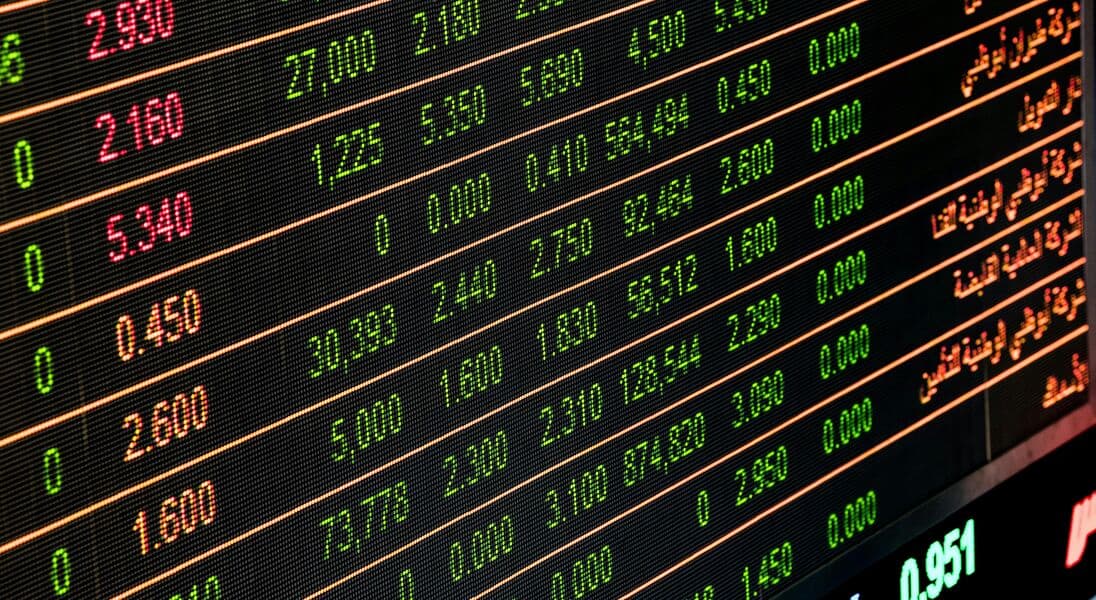
Financial names drove trading on the Cairo Stock Exchange on August 17, 2026, with CCAP at EGP 540.9m in turnover and CIB at EGP 376.9m even as the EGX 30 fell 0.79%. A steady USD/EGP at 50.17 and Brent at $90.64 helped trigger selective rotation into banks and investment holdings.
|6 min read
The clearest signal from trading on Monday, August 17, 2026 did not come from the headline index but from where money actually moved: financial names captured a decisive share of turnover even as the EGX 30 index fell 0.79% to 55,415.1 points. QALA For Financial Investments posted EGP 540.85 million in traded value while rising 0.9% to EGP 5.36, and Commercial International Bank handled EGP 376.86 million despite a modest 0.8% decline.
That split says a great deal about the Egyptian stock exchange today. Liquidity rotated into banks and investment holdings not because the market was broadly bullish, but because traders and institutions favored names seen as more readable in a session where USD/EGP was nearly flat at 50.17, up just 0.05%, while Brent crude climbed to $90.64 a barrel, up 2.4% on the day and 1.9% on the week.
The benchmark decline came with negative breadth, with 16 stocks up, 24 down, and 4 unchanged out of 44 tracked names. That points to a fairly standard consolidation session rather than a disorderly selloff. Losses in Talaat Moustafa Group Holding (TMGH) (-1.4%), SODIC (OCDI) (-1.5%), Telecom Egypt (ETEL) (-1.8%), Abu Qir Fertilizers (ABUK) (-2.1%), and Orascom Construction (ORAS) (-3.9%) weighed on sentiment, while a few pockets of resilience remained visible.
The turnover mix was more revealing than the index move itself. After Bourse du Caire — El Sewedy Electric s'envole de 12,4% avec 503,8 M EGP, l'EGX 30 gagne 1,09%, Monday’s session showed the center of gravity shifting toward financials and holdings. Beyond CCAP and COMI, Palm Hills Developments generated EGP 371.59 million in turnover while rising 2.7% to EGP 15.68, a reminder that real estate still attracts liquidity in Egypt when the currency stabilizes, even temporarily.
EGX financial sector: why banks and holdings held up
The core story was the resilience of the EGX financial sector. Credit Agricole Egypt rose 1.5% to EGP 24.9, EFG Holding (HRHO) added 0.6% to EGP 26.46, and alBaraka Bank Egypt (SAUD) gained 0.7% to EGP 23.47. Even with COMI ending down 0.8%, its EGP 376.86 million in traded value confirmed its role as the main institutional flow barometer for Egyptian equities.
Why did the sector hold up? First, exchange-rate stability matters enormously in Cairo. After the successive devaluations of 2022 through 2024, any session where the dollar moves only 0.05% against the pound mechanically reduces part of the valuation stress on banks, whose balance sheets remain highly sensitive to funding costs, real rates, and deposit behavior. In other words, USD/EGP at 50.17 is not “strong” in absolute terms, but the absence of another sharp move is itself a relative support factor.
Second, oil at $90.64 complicates Egypt’s macro picture because it can increase the energy import bill and pressure external accounts. But that same oil move also tends to reinforce demand for liquid financial names and large domestic franchises, because they are seen as better able to absorb macro shocks than more cyclical segments. That helps explain why CCAP, an investment holding, could rise 0.9% with the heaviest turnover of the day even as the broader index fell.
CIB and CCAP offered two different readings of the same market
COMI’s session was especially instructive. A 0.8% decline looks negative at first glance, but in a market where the EGX 30 index fell 0.79%, the stock mainly functioned as a liquidity vehicle. On the Cairo stock market, CIB remains the bellwether banking name, and EGP 376.86 million in turnover suggests rotation rather than outright flight. In Egypt, very large volumes in CIB often accompany portfolio rebalancing by investors seeking either defensive exposure or access to the country’s most representative bank.
CCAP told a different story. With EGP 540.85 million in turnover and a 0.9% gain, the stock combined liquidity with positive price action, which is less common in a down-index session. For an investment holding, that pattern usually reflects demand for diversified exposure: when the market is torn between real estate, industry, consumption, and finance, a multi-asset vehicle can attract flows. The fact that CCAP outperformed COMI on price while also comfortably exceeding it on turnover was the most important sector signal of the day.
Other rotation pockets: real estate, healthcare, and defensives
Real estate provided selective support. PHDC rose 2.7% to EGP 15.68 on EGP 371.59 million in turnover, while TMGH fell 1.4% and OCDI lost 1.5%. That dispersion shows the market is not trading the sector as a single block. Investors are differentiating more sharply between balance-sheet profiles, sales pipeline depth, and the ability to pass inflation through to end-prices.
Healthcare also held up better than several industrial segments. Ibnsina Pharma (ISPH) gained 3.1% to EGP 13.49, while Cleopatra Hospitals (CLHO) added 0.4% to EGP 17.34. That resilience fits an environment where imported costs remain sensitive to FX, but domestic demand for medicines and healthcare services is relatively inelastic. In the official filings, Minapharm Pharmaceuticals (MIPH) reported consolidated results for the period ending March 31, 2026, according to market disclosures, underlining that news flow remains active in healthcare.
By contrast, several names tied to industrial inputs or export-linked themes came under pressure. Misr Fertilizer Production Company (MFPC) fell 2.7% to EGP 39.7 and Abu Qir Fertilizers (ABUK) dropped 2.1% to EGP 78.0, even though natural gas slipped 1.6% to $2.69. That disconnect suggests the market is looking beyond the day’s gas move toward margin expectations, agricultural demand, and hard-currency dynamics. Alexandria Container & Cargo Handling (ALCN) lost 1.5% to EGP 31.39, showing logistics did not act as a haven despite the stable pound.
Corporate flow: EAST, VALU, and why selectivity stayed high
The regulatory tape was busy on August 17, 2026, with 20 official announcements across the market. Among the better-followed names, Eastern Company (EAST) disclosed board decisions, while U Consumer Finance (VALU) also released a market statement. Even without full financial detail in the headline summaries, that density of disclosures helps sustain selectivity: on the EGX, summer sessions are driven not only by macro but also by the cadence of earnings, auditor responses, board decisions, and capital actions.
That dynamic often favors financials and liquid large caps. When the market has to absorb same-day disclosures involving EAST, MIPH, OIH, GSSC, and LUTS, portfolio managers tend to concentrate execution in names where liquidity is deepest. That is exactly what the turnover figures in CCAP and COMI showed.
Outlook: what to watch next on EGX today
For the next few sessions, three variables matter most. First is USD/EGP, which held at 50.17 on Monday. In Egypt, equity performance always needs a hard-currency lens because nominal gains in pounds can be diluted in U.S. dollar terms. Second is oil: Brent above $90 can revive questions around the energy bill, inflation, and external balances. Third is the corporate calendar, with more earnings releases and board decisions expected across financials, healthcare, consumer, and industrial names.