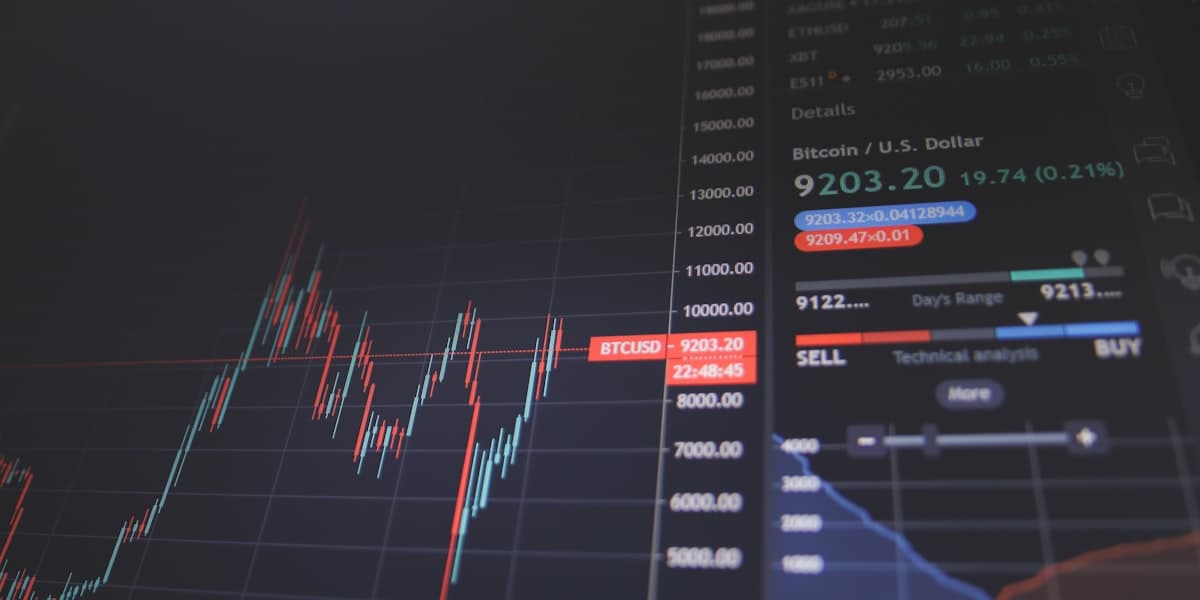
Cairo Stock Exchange — MCQE and MTIE Jump 6.5% as Mid-Caps Seize the Lead
MCQE and MTIE led Wednesday’s gains with a 6.5% rise each, while the EGX 30 added just 0.38%. The session underscored a shift toward mid-caps as the dollar held at 50.17 EGP and Brent crude stayed elevated at $88.71.
|5 min read
Wednesday 12 August 2026 delivered a clear message on the Egyptian stock exchange today: leadership came from mid-caps, not from the usual heavyweights. Misr Cement Qena and MM Group for Industry & International Trade both surged 6.5%, closing at EGP 259.5 and EGP 11.97 respectively, while the EGX 30 index rose a far more modest 0.38% to 55,039.8.
That gap matters because it emerged against a tougher macro backdrop. The USD/EGP stood at 50.17, up 0.65% on the day, while Brent crude held at $88.71 a barrel, still 6.2% higher over one week. In Egypt, where currency moves have repeatedly reshaped equity valuations since the devaluations of 2022-2024, a mild gain in local-currency indices often hides a much more selective market underneath.
Market context: positive breadth, but not a broad blue-chip rally
The Cairo stock market posted constructive breadth, with 24 stocks up, 17 down, and 3 unchanged out of 44 names tracked. That is a healthy ratio of roughly 1.4 gainers for every loser, but it does not point to a market-wide melt-up. Instead, it suggests internal rotation, with money moving into selected pockets rather than lifting the entire board evenly.
Among the notable gainers beyond the two leaders, Qalaa Holdings rose 2.5% to EGP 5.33 on the session’s heaviest turnover of EGP 628.7 million. Egyptian Chemical Industries - Kima added 1.2% on EGP 300.7 million in traded value. On the losing side, Palm Hills Developments fell 2.0% to EGP 15.17, Elsewedy Electric dropped 2.0% to EGP 107.11, and Telecom Egypt lost 2.2% to EGP 108.49. That split shows that liquidity remained active, but not necessarily supportive for large caps.
Macro conditions help explain the selectivity. A dollar at EGP 50.17 raises the local-currency cost of imported inputs, while Brent near $89 keeps pressure on energy-sensitive sectors. For the EGX today narrative, that means local index gains need to be read carefully. A 0.38% rise in EGP terms is much less compelling in dollar terms, especially in a market where FX remains the dominant valuation lens.
Why MCQE and MTIE stood out
The twin 6.5% rallies in MCQE and MTIE point to a broader mid-cap momentum trade, but the underlying logic differs by name. For Misr Cement Qena, the move likely reflects renewed interest in domestic industrial plays with pricing leverage. Cement producers are closely tied to construction activity, infrastructure demand, and their ability to pass through higher costs. With oil elevated and imported cost pressures still relevant, investors often gravitate toward companies seen as better positioned to defend margins through local pricing.
That interpretation is supported by the wider winners’ list. Arabia Cotton Ginning gained 2.9% to EGP 11.9, Delta Sugar rose 2.8% to EGP 49.82, and Upper Egypt Mills advanced 4.3% to EGP 576.0. These are different businesses, but they share one feature: strong exposure to domestic demand and, in some cases, to import-substitution themes that become more attractive when the currency weakens.
For MM Group, the rise to EGP 11.97 looks more like a rotation back into consumer distribution and trade-linked names that can operate in an inflationary environment. In such businesses, pricing power, inventory turnover, and distribution reach can matter more than headline macro noise. When large caps lose momentum, these stocks often become tactical vehicles for investors seeking higher short-term beta within the market.
The fact that the day’s top two gainers were mid-caps rather than benchmark leaders is itself meaningful. When the flagship index rises by less than 0.4%, but several mid-sized names climb between 3% and 6.5%, the market is signaling stock-picking conditions rather than a uniform macro rerating of Egypt.
Turnover and announcements: where the money actually moved
The session was also notable for concentrated trading activity. CCAP led turnover with EGP 628.7 million, followed by PHAR at EGP 585.2 million, EGCH at EGP 300.7 million, PHDC at EGP 276.5 million, and AMER at EGP 261.1 million. When a stock like CCAP rises 2.5% on the market’s largest traded value, it usually points to meaningful repositioning rather than random retail noise.
On the official news flow dated 11 August, the exchange carried a steady stream of disclosures: board decisions from Housing & Development Bank, financial results from Obour Land, board decisions from Kima, and several disclosure-form and governance-related releases. The absence of a major fresh announcement directly tied to MCQE or MTIE strengthens the case that Wednesday’s move was primarily flow-driven and sentiment-driven, rather than triggered by a single corporate event.
Losses were spread across several sectors. Healthcare saw PHAR down 7.2%, real estate names such as Heliopolis Housing and Palm Hills fell 2.3% and 2.0%, telecoms weakened with ETEL at -2.2%, and industry softened with Elsewedy at -2.0%. According to Arab Finance, Elsewedy Electric’s consolidated H1 2026 profit rose 14.11% year on year, yet the stock still fell. That is a useful reminder in any Egypt stock market analysis: earnings growth alone does not guarantee upside when positioning is crowded or profit-taking sets in.
Outlook: FX, oil and H1 results remain the key markers
The next signals to watch are straightforward. First is the USD/EGP around 50.17, because currency stability or renewed slippage will shape how investors interpret local equity gains in real terms. Second is Brent at $88.71: for an economy exposed to imported energy costs across industry, transport and consumer supply chains, sustained oil strength can quickly alter margin assumptions.