
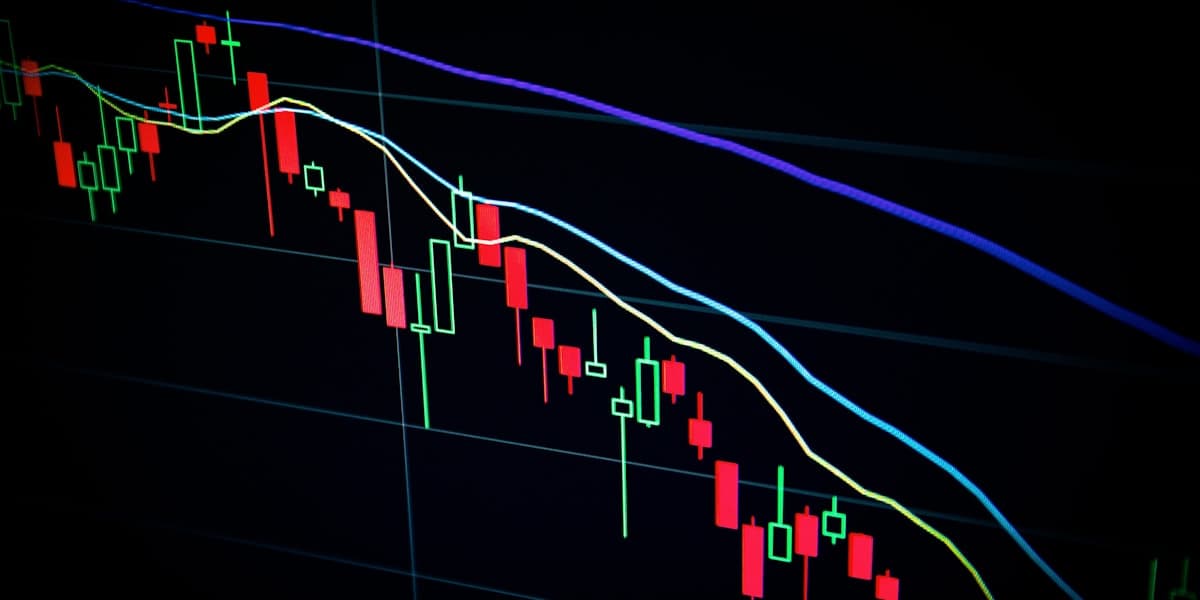
Nigeria’s equity market retreated sharply on Thursday, March 26, 2026, with the NGX ASI down 1.67% to 1,480.83 points, even as Brent crude held above $101.61 a barrel. That contrast matters: in an economy where oil still anchors export earnings and foreign-exchange liquidity, triple-digit crude would normally help sentiment, but the naira’s continued weakness at NGN 1,383.42 per dollar, up 0.63% on the day, reminded traders that equities are still pricing currency risk and a high cost of capital first.
This NGX today session also looked weaker beneath the headline index move. Market breadth came in at 30 gainers, 36 losers and 82 unchanged stocks across 148 listed names, pointing to broad participation but limited conviction. In other words, Thursday’s decline was not just a one-stock event: it reflected a market still balancing elevated money-market yields, sticky domestic inflation and stretched valuations in parts of the large-cap universe.
Market context: firm oil could not offset FX pressure
The session’s main paradox was the disconnect between oil and local equities. Brent slipped 0.6% on the day, but remained up 1.7% on the week, against a backdrop of heightened Middle East tensions, according to the global headlines provided. For Nigeria, Africa’s largest oil producer, that price level is theoretically supportive for export receipts, fiscal revenues and dollar liquidity. In practice, however, the local market is also focused on how much of that oil strength actually feeds through into reserves, the budget and, crucially, the FX market.
That is where USD/NGN at 1,383.42, up 0.63%, weighed on sentiment. A weaker currency raises import costs, keeps inflation pressure alive and supports the case for interest rates to stay high for longer. For listed companies, that means margin pressure in import-dependent sectors, a heavier funding burden and, for foreign investors, NGN returns that can be diluted once translated back into dollars. In that setting, even strong oil is not enough on its own to lift the Nigerian stock exchange today.
Key figures
- NGX ASI: 1,480.83 points (-1.67%)
- Market breadth: 30 gainers / 36 losers / 82 unchanged
- Brent: $101.61/bbl (-0.6% day, +1.7% week)
- USD/NGN: 1,383.42 (+0.63%)
- NGX Group: NGN 168.75 (-6.5%)
Main story: financials and market infrastructure names led the pullback
The clearest signal of the day came from Nigerian Exchange Group, which fell 6.5% to NGN 168.75, placing it among the session’s biggest decliners. When the exchange operator itself underperforms the broader market, it often reflects softer expectations for trading activity, fee generation or the market’s ability to sustain previous rallies. The move followed a period in which investors had been more willing to reward names tied to sector rotation and industrial expansion headlines.
The drop in NGX Group also fits a wider pattern. Nigerian investors are still repricing financial assets against the backdrop of the central bank’s bank recapitalisation drive, elevated fixed-income yields and a restrictive monetary environment. Even though the major banks did not dominate the loser board on Thursday, sector valuations remain highly sensitive to the path of rates, cost of risk and the ability to preserve real earnings in dollar terms. That remains central to any serious Nigeria stock market analysis in 2026.
Names such as GTCO remain key reference points for the market when assessing how lenders are navigating rates and FX volatility. The issue is not only the daily move in the GTBank stock price, but whether earnings quality can hold up in an environment where nominal growth is strong while naira volatility complicates the reading of real returns and capital strength.
Gainers: speculative appetite stayed in smaller names
On the upside, the day’s best performers were concentrated in smaller-cap counters, with Premier Paints up 10.0% to NGN 34.1, Zichis Agro Allied Industries +10.0% to NGN 12.54, Legend Internet +9.9% to NGN 7.98, John Holt +9.9% to NGN 17.25 and McNichols +9.8% to NGN 6.75. That pattern is telling: when the top gainers are mostly lower-liquidity names, it usually points to tactical risk-taking rather than broad macro conviction across the market.
That kind of rotation can easily coexist with an index decline if heavyweight stocks are falling or flat. That appears to be what happened on Thursday. Retail activity remained visible in low-float counters, where daily moves can quickly hit the 10% limit, while institutional money stayed more selective in large caps exposed to FX, rates and consumer demand.
Supporting stories: cement expansion keeps the industrial theme alive
Cement remains one of the Nigerian market’s defining themes. According to the press context provided, BUA Cement plans to add capacity through a 3 million metric tonnes per annum greenfield plant alongside a brownfield project. That matters because it shows producers are still betting on structural infrastructure and construction demand despite high rates and a weak naira. Investors are therefore keeping a close eye on BUA Cement and Dangote Cement, two of the market’s clearest domestic-cycle barometers.
The sector sits at the intersection of several conflicting forces. On one side, infrastructure spending and urbanisation support volumes. On the other, energy, logistics and financing costs remain elevated. Brent above $100 can help Nigeria’s fiscal position, but it can also keep transport costs and inflation under pressure. For the market, that means reading the dangote cement share price requires a view on both local demand and macro transmission.
Among other decliners, FTN Cocoa Processors fell 6.7% to NGN 5.6, Veritas Kapital Assurance dropped 7.0% to NGN 2.0, Sunu Assurances Nigeria lost 8.9% to NGN 4.31 and University Press slid 9.2% to NGN 5.45. The sector spread matters because it shows Thursday’s weakness was not confined to one pocket of the market. Insurance, agro-processing and publishing all came under pressure, reinforcing the idea of a broader risk reduction session rather than a narrow technical adjustment. For context, readers can revisit our earlier coverage, Bourse du Nigeria — DANGSUGAR recule de 2,1% tandis que DANGCEM tient à 810 NGN face à la chute du pétrole.
Outlook: what to watch after Thursday’s close
Over the next few sessions, the market will remain highly sensitive to three hard variables: Brent’s ability to hold around $100, the path of USD/NGN above 1,380, and company announcements on earnings, capital raising and expansion plans. Traders will also be watching for any fresh signals on CBN policy and the implementation of bank recapitalisation, both of which could reshape sector allocation. Until higher oil prices translate more clearly into FX relief, the NGX all share index is likely to be judged as much through the naira lens as through reported earnings.