Nigerian Exchange — DANGSUGAR Falls 5.5% in 5 Days as DANGCEM Draws Capital
DANGSUGAR fell 5.5% over five sessions to 69.0 NGN, underperforming a market that was already down 1.47%. By contrast, DANGCEM rose 8.7% to 1,047.0 NGN, pointing to a clear rotation into cement within the Dangote complex.
|5 min read
The clearest signal on Dangote Sugar Refinery this week is not a single headline but a sharp market verdict: the stock has fallen 5.5% over five sessions, from 73.0 NGN to 69.0 NGN, even as the broader Nigerian market was already under pressure. Over the same stretch, Dangote Cement climbed 8.7%, from 963.0 NGN to 1,047.0 NGN, pointing to a rotation of capital within the Dangote complex rather than a blanket exit from Nigerian equities.
That divergence matters because the NGX all share index fell 1.47% on Tuesday to 1863.41, with market breadth firmly negative at 18 gainers, 33 losers and 9 unchanged stocks. In other words, DANGSUGAR did not just decline in a weak tape; it underperformed an already falling market, while DANGCEM moved decisively the other way.
Market context: NGX today is rewarding selectivity, not broad risk-taking
Tuesday’s NGX today session showed a market that was selective rather than uniformly risk-on. The day’s gainers were led by smaller names such as Haldane McCall, up 10.0% to 3.2 NGN, and Veritas Kapital Assurance, up 9.4% to 1.39 NGN. On the losing side, pressure hit more widely followed counters including Fidelity Bank, down 5.5% to 20.8 NGN, and First HoldCo, down 5.7% to 132.0 NGN.
Turnover was concentrated elsewhere. According to market data, First HoldCo traded 1,644,323,877.4 NGN, Zenith Bank 1,035,455,320.9 NGN, GTCO 888,390,086.7 NGN, FCMB 572,347,605.1 NGN, and Nigerian Breweries 589,158,032.9 NGN. That concentration is important for DANGSUGAR because when liquidity is focused on banks and a handful of large caps, weaker consumer names can struggle to find sustained support.
Macro conditions also shaped the backdrop. The naira strengthened modestly, with USD/NGN at 1347.75, down 0.81%, while Brent crude rose to $91.6 a barrel, up 0.8% on the day and 5.2% on the week. For the Lagos stock market, that mix is not neutral. A firmer naira can ease imported cost pressure, but higher oil can also feed inflation expectations and keep domestic rates elevated. In Nigeria, where investors constantly compare equity returns with high-yield fixed-income alternatives, that matters for valuation discipline.
DANGSUGAR: technical weakness is starting to look like a fundamental message
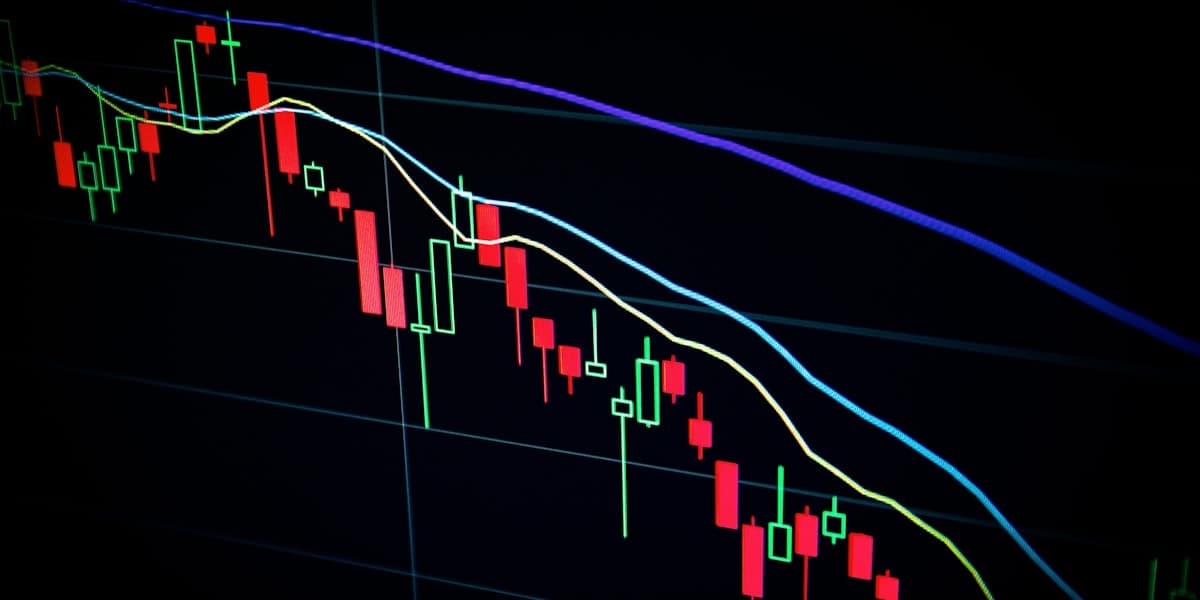
At 69.0 NGN, DANGSUGAR looks technically weaker than its cement peer. Its internal score of -0.250, flagged as “Sell,” and an RSI of 42.22 do not point to panic selling, but they do indicate fading momentum without a confirmed reversal. The five-day path tells the story clearly: 73.0 NGN, then 70.0 NGN, then 64.55 NGN, followed by a rebound to 70.1 NGN, before slipping back to 69.0 NGN. That is less the pattern of a healthy uptrend taking a pause and more the pattern of a stock struggling to hold a recovery after a sharp drop.
For retail investors, the key point is that the rebound from 64.55 NGN to 70.1 NGN — a move of 5.55 NGN — failed to stick. Buyers were willing to step in after the selloff, but they were not strong enough to defend the bounce. In a Nigerian stock exchange today environment where capital is moving quickly toward names with clearer earnings resilience or stronger momentum, that lack of follow-through becomes a signal in itself.
The dividend yield of 2.17% offers some support, but it is modest relative to the stock’s recent volatility and its “High” risk label. Put simply, a 2.17% yield does not offset a 5.5% decline in just five sessions. That mismatch is often enough to trigger portfolio rotation, especially when another stock in the same industrial ecosystem is offering both stronger price action and a higher cash yield.
Why DANGCEM is getting the flows DANGSUGAR is losing
The comparison with DANGCEM is central because it explains investor behavior better than any standalone comment on DANGSUGAR’s decline. Dangote Cement has risen from 963.0 NGN to 1,047.0 NGN in five days, backed by a 0.625 “Strong Buy” score, an RSI of 57.29, a P/E ratio of 17.5, and a dividend yield of 4.30%. Risk is also marked “High,” but the market is clearly judging the valuation-yield-momentum mix to be more compelling there.
Sector exposure helps explain that preference. Cement is often treated as a more direct play on domestic construction demand and infrastructure spending, while refined sugar is more exposed to consumer purchasing power and input-cost sensitivity. With Brent at $91.6 and global commodity headlines warning of tighter supply conditions, investors tend to favor businesses seen as better able to defend margins or pass through costs. In that context, the recent move in the dangote cement share price is not just a rally; it is a relative confidence signal that DANGSUGAR has yet to earn.
There is also a market structure issue. Nigerian equities remain heavily driven by a few liquidity hubs — banks, telecoms and cement. That makes it harder for a stock in correction mode to stabilize unless it has a fresh catalyst of its own. The fact that Zenith Bank, GTCO and First HoldCo alone accounted for more than 4.1 billion NGN in combined value traded underlines how concentrated daily liquidity can be.
Supporting stories: banks were weak, but consumer names were mixed
Beyond DANGSUGAR, Tuesday’s session showed notable weakness in financials, with First HoldCo down 5.7%, Fidelity Bank down 5.5%, and GTCO down 0.4%. For readers tracking the GTBank stock price, GTCO’s smaller decline despite 888,390,086.7 NGN in traded value suggests selling pressure there was more controlled than in some peers. That matters because money leaving banks did not automatically rotate into consumer staples such as sugar.